The Time Between Shots: A Family Trip to Streamsong
By Brendon R. Elliott, PGA
Golf Industry Veteran, Award Winning PGA Coach, Golf Writer & Storyteller
Streamsong is known for golf that looks and feels unlike anything else in Florida. During a two-day trip with my father and brother, I was reminded that its greatest strength may be the space it gives people to reconnect.
The photographs from our trip to Streamsong capture the obvious things.
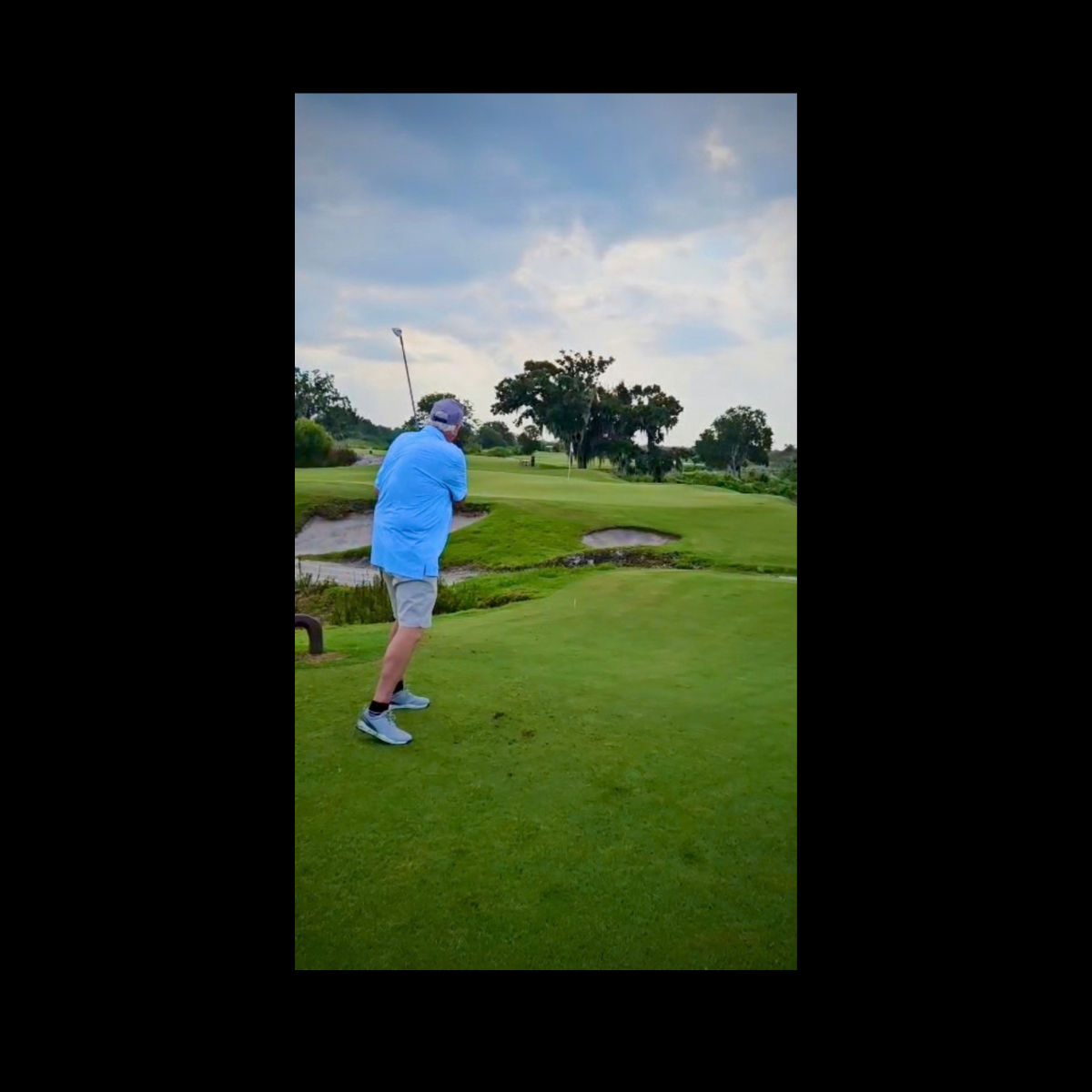
My dad, my brother, Graham, and I stood beneath a wide Central Florida sky. Behind us were enormous sand dunes, native grasses and golf holes that looked as though they belonged along the rugged coast of Scotland rather than in the middle of the Sunshine State.
There were golf bags, scorecards and the expected smiles.
What those pictures cannot fully capture is the time between the shots. That is what I remember most.
My father is 75. Graham is 48. I have spent more than three decades working in golf and more than 17 years and counting as a PGA Professional. The game has been a constant presence throughout our family story, but adulthood has a way of squeezing even permanent things into smaller spaces.
Work expands. Families grow. Responsibilities multiply. The Saturday rounds that once required little more than loading the clubs into the car must now be scheduled weeks in advance.
Then, every so often, golf gives you a reason to stop everything else.
For us, that reason was a two-day trip to Streamsong Resort. We would play Streamsong Red in the afternoon, stay overnight at the Lodge and walk the 13-hole routing of The Chain the next morning.
On paper, it was 31 holes and one night away.
By the time we left, the scorecards felt like the least important souvenirs.

A Game Passed Down
Graham and I grew up in a golfing household. Weekend mornings were built around the game, and Sunday afternoons carried the familiar murmur of tournament coverage from the television. There were golf balls scattered around the backyard, family rounds and eventually a membership at our local club.
Dad introduced us to golf, but he never presented it as merely a sport.
The game was a classroom.
It taught patience because the ball did not always listen. It taught integrity because golfers were expected to call penalties on themselves. It taught humility because the course could expose you without warning, no matter how well you thought you were playing.
So could the competition.
The Elliott family can turn a casual round into a serious match before the first tee shot reaches its apex. There is usually some needling, plenty of scoreboard awareness and more attention paid to who has the honor than any of us may want to admit.
That competitive streak has created plenty of family stories, but it was not the most important part of this trip.
Streamsong gave us something rarer. It gave us enough separation from everything else to remember why we had always enjoyed playing together.

Florida Reimagined
The transformation begins during the drive into Streamsong.
Central Florida is familiar territory to me, but the resort does not look or feel like the Florida most golfers know. There are no homes lining the fairways. No traffic moves beyond a row of trees. No familiar commercial landmarks interrupt the horizon.
The sky grows larger, the landscape becomes more dramatic and the outside world begins to fade.
Streamsong rose from land once used for phosphate mining, yet the finished property does not feel constructed in the conventional sense. It feels uncovered. Towering dunes, sandy expanses, lakes and native vegetation form a setting that is both rugged and peaceful.
Florida golf is often associated with flat terrain, palm trees, residential communities and water hazards framed by perfectly manicured edges. Streamsong offers something entirely different. The movement in the land feels almost improbable for the middle of the state.
Great golf architecture challenges the mind. A great golf destination also changes your internal pace.
By the time we reached the clubhouse, we were no longer three people trying to fit a golf trip into crowded calendars. We were simply a father and his two sons preparing to play together again.

When a Delay Becomes Part of the Trip
Florida weather arrived before our tee time, pushing the afternoon schedule back.
A weather delay can easily become the first frustration of a golf trip, particularly when only one round and one night are involved. At Streamsong, it instead became one of the first examples of how seriously the staff takes the guest experience.
The golf team contacted me before the round, explained the situation and continued to provide updates. When the delay lasted longer than initially expected, we were offered the option to move to the Black Course and begin closer to our original time.
There was no pressure and no confusion. We were simply given clear information and a choice.
We had come to play Red, so Red it would be.
While we waited, we settled into Pub 59 for something to eat. The relaxed clubhouse atmosphere gave us exactly what we needed. Rather than rushing from the car to the first tee, we had time to settle in, talk and begin enjoying the trip before anyone hit a shot.
That detail stayed with me.
Hospitality is often judged by how people respond when everything goes according to plan. The better test comes when weather changes the schedule, a guest has a question or something needs to be adjusted quickly.
The Streamsong team kept us informed, gave us options and allowed us to make the decision that worked best for our group. A potential disruption became more time around the table with my dad and brother.
That is not a bad way to begin a family golf trip.

Red Was Worth the Wait
Streamsong Red, designed by Bill Coore and Ben Crenshaw, asks golfers to think from the opening hole.
The fairways provide room in places, but width does not eliminate decisions. It creates them. Position matters. Angles matter. The contours surrounding the greens can help a thoughtfully played shot or carry an indifferent one farther from the hole.
That is the kind of golf course I appreciate as a coach.
Red does not rely solely on length, forced carries or narrow corridors to create difficulty. It asks players to see the hole, select a line and commit to the shot. The landforms are dramatic without becoming theatrical, while the bunkers appear to belong naturally within the surrounding terrain.
The course presents options, but those options come with consequences.
Our caddie, Eric, added another layer to the experience. He understood the lines from the tee, knew how the greens moved and seemed to have an answer whenever we needed one.
A good caddie provides yardages and reads. A great one also understands the personality of the group.
Eric fit naturally into ours. He offered information without overwhelming us and became part guide, part storyteller and part steadying presence as we worked our way around Red.
He also seemed to have the correct line on every putt, which became increasingly useful as the afternoon continued.
The wildlife supplied its own commentary.
Large alligators rested near the lakes, looking almost prehistoric against the sand and native vegetation. Birds circled against the blue sky. One smaller bird seemed determined to walk part of a fairway with us, as though it had joined our group and was prepared to contribute to the conversation.
At another point, Graham and Eric stopped their cart only a few feet from a snake resting near the path. None of us felt compelled to make a closer inspection. Whatever the species, we agreed quickly that it owned that particular piece of Streamsong.
Those encounters made the property feel alive.
Streamsong is carefully maintained, but it has not been scrubbed of its identity. The sand, wind, water, vegetation and wildlife remain part of the experience. You are not simply moving from one golf hole to another. You are traveling through a landscape that continually reminds you where you are.

The 78 I Did Not See Coming
There is some irony in being a PGA Professional who rarely plays golf.
I coach the game, study it, write about it and spend most days helping other people play it better. Yet a dozen rounds in a year may be a generous estimate for my own game at this stage of life.
I am very much a non-playing PGA Professional and coach.
That does not mean the competitive part of me has disappeared. It is still there, buried beneath the lesson schedule, writing deadlines, family responsibilities and the businesses that have steadily pushed my own playing time to the side.
On Red, that part of me began to reappear.
I found a rhythm. I drove the ball reasonably well, managed my misses and accepted the swing I brought with me rather than chasing the player I might have been years ago.
There had been no lengthy range session or intensive preparation. I was not trying to rebuild my golf swing in the middle of the round. I simply chose targets, trusted what I had and played.
The result was a halfway decent 78.
No course record was threatened, and nobody framed the scorecard. For me, however, it was deeply satisfying.
It proved that the game had not gone anywhere.
More important, it reminded me that playing golf and working in golf are not the same experience. Coaching and writing can deepen your understanding of the game, but neither replaces standing over a shot and discovering whether you can still produce what you see.
For a few hours, I was not evaluating another player’s swing, planning a lesson or searching for the story inside a tournament.
I was simply playing golf.
My dad and brother were there for it, which made the number mean more. They have known every version of my golf life, from the kid who played constantly to the coach and writer whose professional days now revolve around helping other golfers and telling their stories.
For one afternoon on Red, I got to reconnect with the part of the game that had started everything.

The Value of Staying
A one-night stay changes a golf trip in ways that are easy to underestimate.
Without the Lodge, we could have played Red, loaded the clubs and started driving home while the final holes were still fresh in our minds. The experience would have ended almost as soon as the round did.
Staying on property removed that urgency.
The round was allowed to linger.
The Lodge is modern, spacious and comfortable, but its greatest advantage may be how naturally it keeps guests connected to the experience. The golf, accommodations, dining and gathering spaces feel like parts of the same trip rather than separate stops on an itinerary.
There is a particular rhythm to a good overnight golf trip. You play, eat and gradually replay the day’s shots, which somehow improve with every retelling.
A missed green becomes a difficult recovery. A 15-foot putt grows to 20. A decent drive becomes the best one hit all month.
Nobody needs to watch the clock. Nobody has to prepare for a long drive home. The conversation can continue until everyone is ready to call it a night.
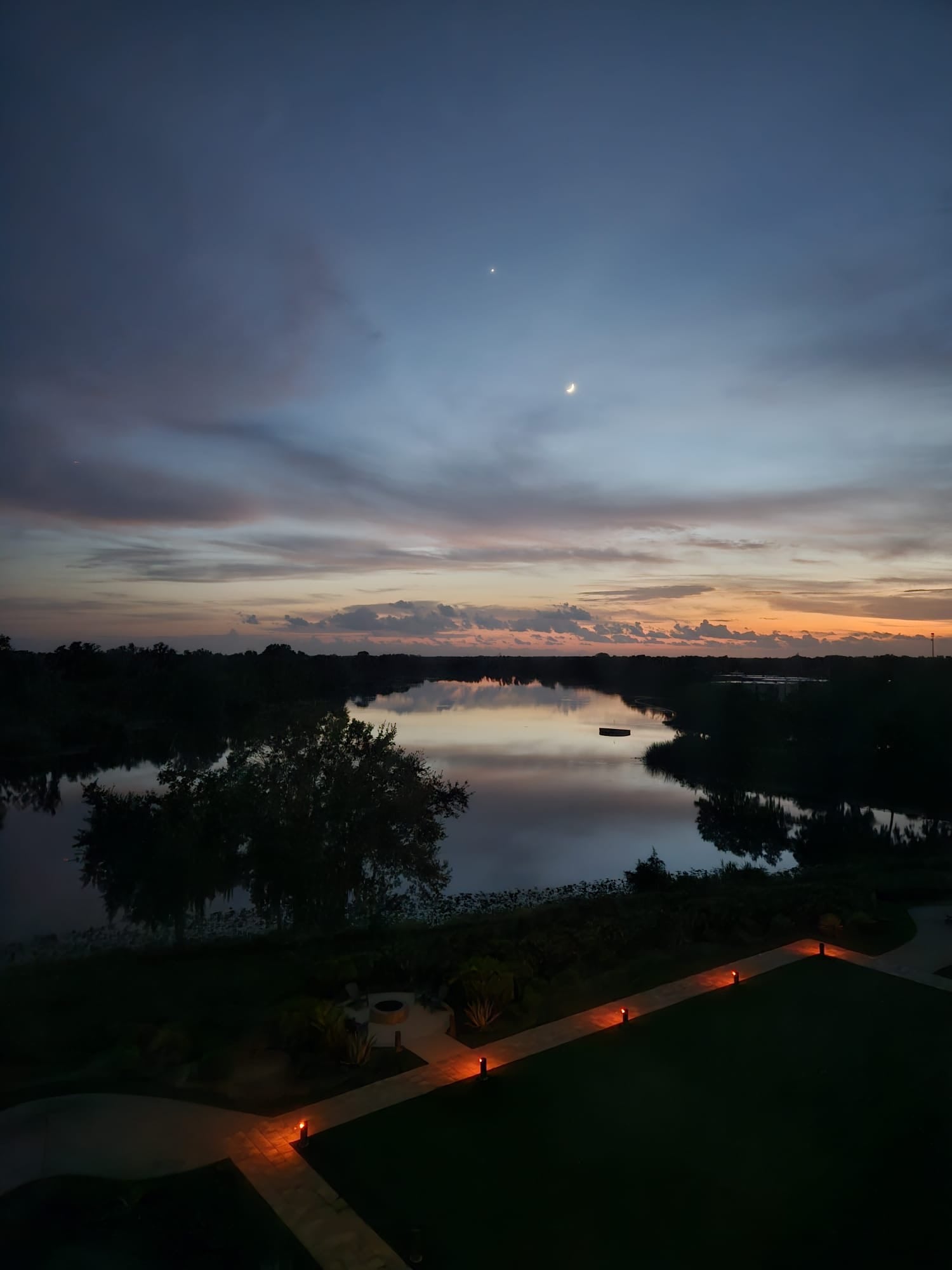
The Lodge becomes more than a place to sleep. It becomes the bridge between rounds.
Dining is part of that rhythm, too. A golf resort can have acclaimed courses, but guests spend only a portion of their stay standing over a ball. The meals, conversations and unhurried time around the table often become just as important.
Streamsong understands that the experience does not stop when the final putt falls.
The same was true of the people we encountered throughout the property. From the communication surrounding the weather delay to our time in the clubhouse, the golf operation, the caddie experience, the Lodge and the dining team, there was consistency in the care we received.
It was attentive without hovering and professional without feeling rehearsed.
The property may be expansive, but the service kept the trip personal.
The Chain Changes the Mood
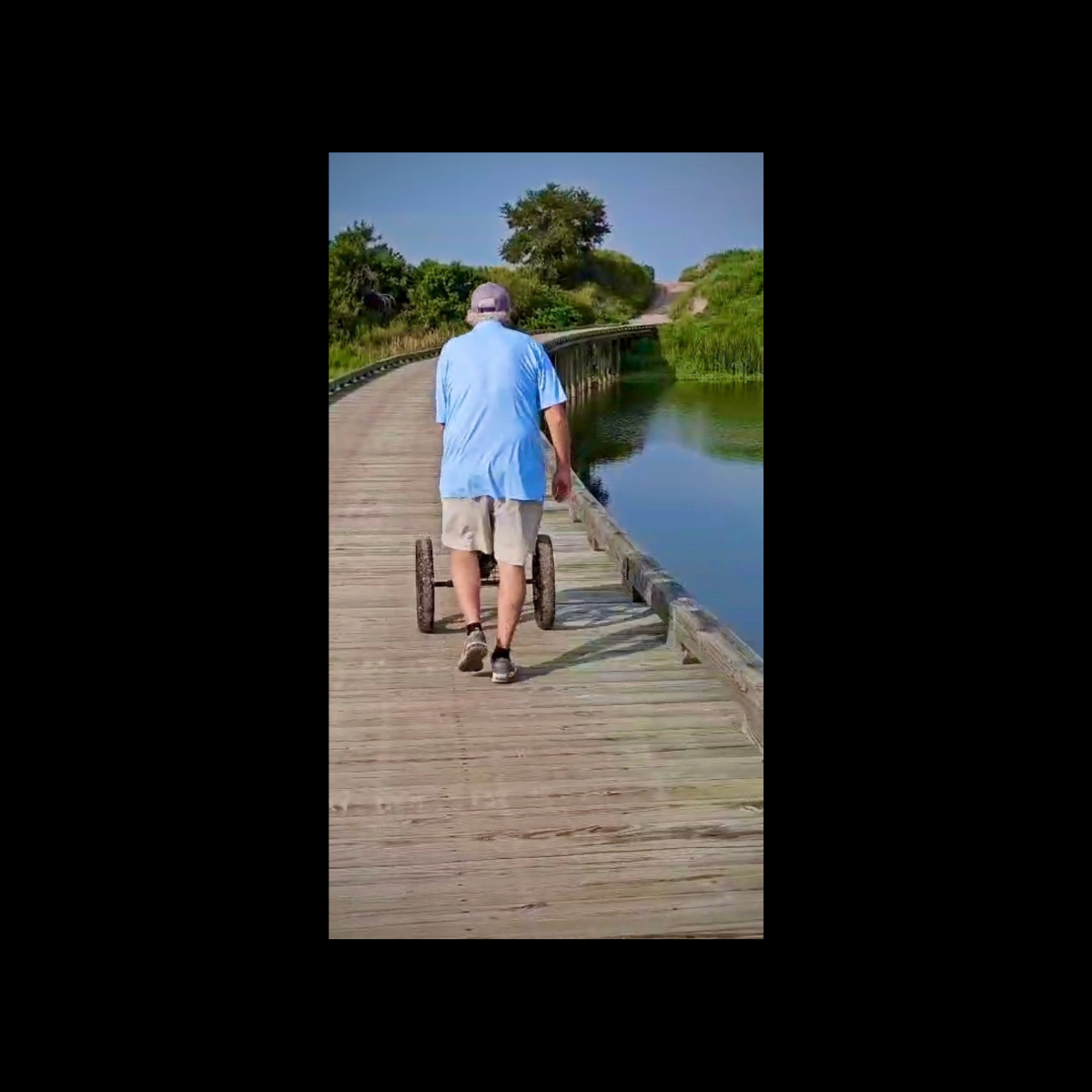
The next morning, we walked The Chain.
The contrast with Red was immediate, but the architectural connection was clear. Coore and Crenshaw also designed The Chain, and the same belief in options, angles and creativity runs through the shorter course.
The difference is the attitude it encourages.
The Chain is designed for experimentation, match play, camaraderie and fun. Flexible teeing areas allow groups to experience holes from different distances and angles. The shorter yardages do not remove strategy. They concentrate it.
We chose the 13-hole routing and decided to play a scramble.
The Elliott family competition was temporarily suspended. Instead of trying to beat one another, we combined our shots and saw how many birdies we could make together.
The jokes came easily. So did the laughter.
Short courses are sometimes treated as secondary experiences, something to play after the “real” round has been completed. The Chain rejects that idea.
Its holes may be shorter, but the greens and surrounding contours continue to ask questions. Players can choose aggressive lines, use slopes, experiment with different shots and experience the ground game in ways that traditional Florida golf rarely permits.
For us, the scramble created exactly the right version of the morning.
There was no pressure to protect a score. A poor shot disappeared when someone else hit a better one. A good shot belonged to all three of us. We were no longer opponents trying to claim family bragging rights.
We were a team.
The Putter From 1969
Dad’s short game has always been one of his strengths.
He still carries a putter he has used since 1969, a club that has been part of our family’s golf history longer than either of his sons has been alive.
On The Chain, he faced a putt of roughly 48 feet.
He settled over it with the same smooth, unhurried tempo Graham and I had watched for decades. The ball started on line, traveled across the green and continued rolling until it disappeared into the cup.
Graham and I looked at each other.
There was joy in the putt, but there was also recognition. We were watching something more meaningful than a long birdie falling.
Our dad, at 75, was still showing us the game.
The man who had introduced us to golf was using a putter from 1969 to give his two adult sons another moment they would carry with them.
Golf keeps its official records through scorecards, trophies and statistics. Families keep them differently.
We remember the putter.
The tempo.
The ball disappearing.
The look on someone’s face.
The walk to the next tee.

A Reason to Come Back Together
As we played the final holes, the morning became quieter.
It was not an uncomfortable or empty silence. It was the quiet that comes when people know one another well enough that every moment does not need to be filled with conversation.
We walked through the dunes and native grasses carrying the satisfaction of the previous afternoon, Dad’s long putt and a trip that had already become part of our family history.
Golf had given us a lifetime of memories before we reached Streamsong.
This trip did not replace them. It gathered them.
Red brought back the challenge, strategy and personal satisfaction of playing a full championship course. The Chain removed the pressure and allowed us to combine our games. The Lodge gave the trip room to breathe. The dining experience created more time around the table. Eric and the Streamsong team made every transition feel easier.
Each element mattered. Together, they created something larger than a golf itinerary.
Streamsong is unquestionably a destination for serious golfers. Its architecture, scale and landscape deserve the attention they receive.
Yet describing it only as a place for golf enthusiasts misses part of its value.
It is also a place for fathers and sons, brothers, spouses, old friends and new ones. It is a place where people can step outside the routines that separate them and spend a day or two walking, talking, competing and laughing.
The golf creates the reason to go.
The time together becomes the reason to remember it.
Dad introduced Graham and me to the game because he believed golf could teach us something about life. Decades later, standing together at Streamsong, I understood the lesson a little differently.
The greatest gift was not only the game itself.
It was the reason the game would keep giving us to come back together.