From Bone Valley to Streamsong: The Florida Golf Story No One Saw Coming
By Brendon R. Elliott, PGA
Golf Industry Veteran, Award Winning PGA Coach, Golf Writer & Storyteller
Most golfers think they know Florida golf before they ever peg a tee.
Flat fairways. Water on both sides. Condo lines. Palm trees. Bermuda rough. A finishing hole where the safe play is almost always somewhere away from the lake.
Then they drive into Streamsong and realize Central Florida had another story to tell.
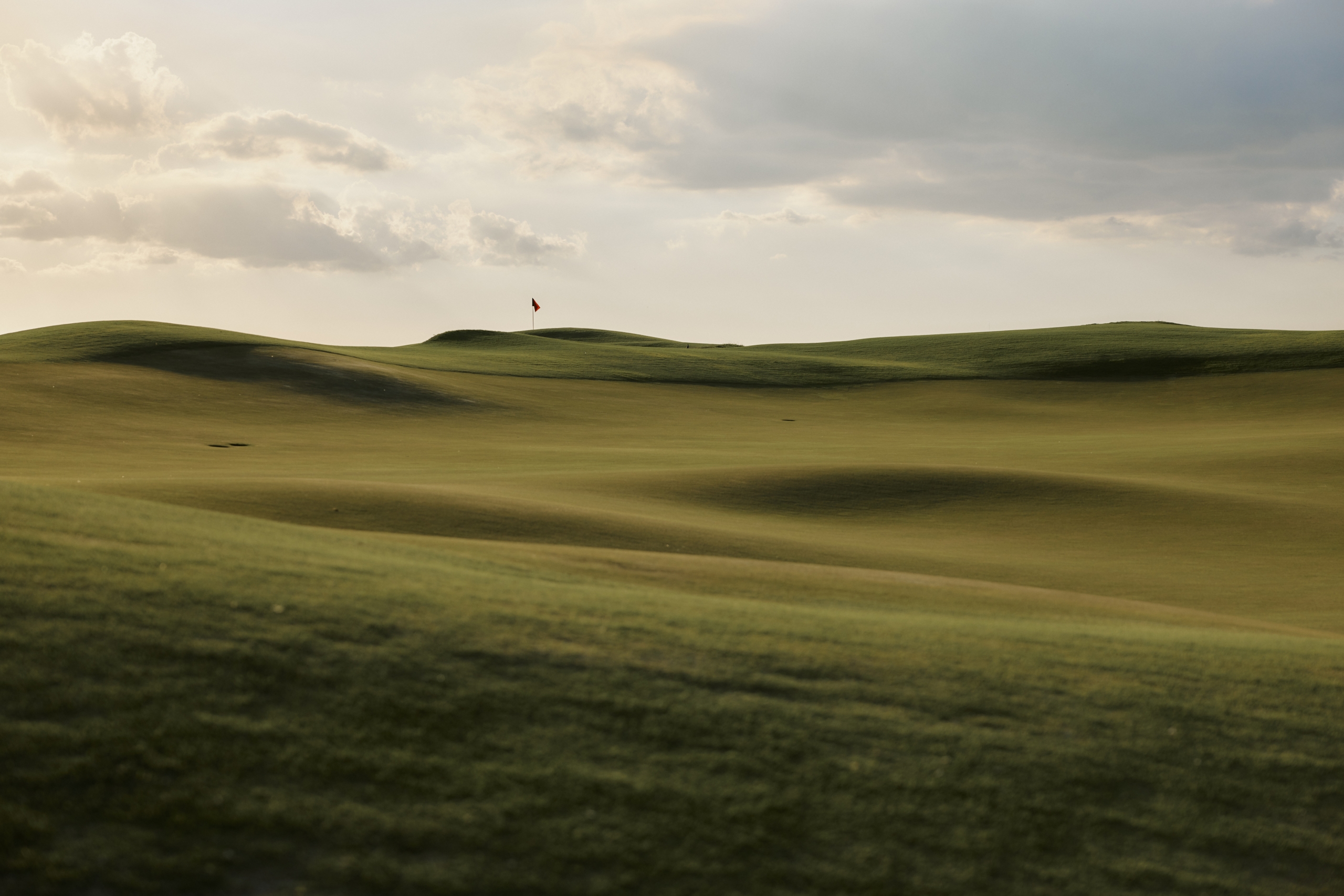
This is not the Florida golf most people expect. It is bigger, wider, quieter and stranger in the best possible way. The land rises and falls. The sand glows. The wind has room to move. The ball does not always stop where it lands, and the best shot is not always the one flying straight at the flag.
That is the genius of Streamsong.
It did not become one of America’s great golf destinations by pretending the land had no past. It became great because it trusted what the land had become.

A Different Kind of Florida
There is a moment that happens to almost every first-time guest at Streamsong.
It may come on the drive in, when the road starts to feel farther removed from the Florida they know. It may come from an elevated tee, when the view opens into sand, water, native grasses and sky. It may come after a ball lands on a slope, feeds toward a target and does something more interesting than simply stopping where it fell.
At some point, the golfer looks around and asks the same basic question.
Where did this come from?
The answer begins long before golf.
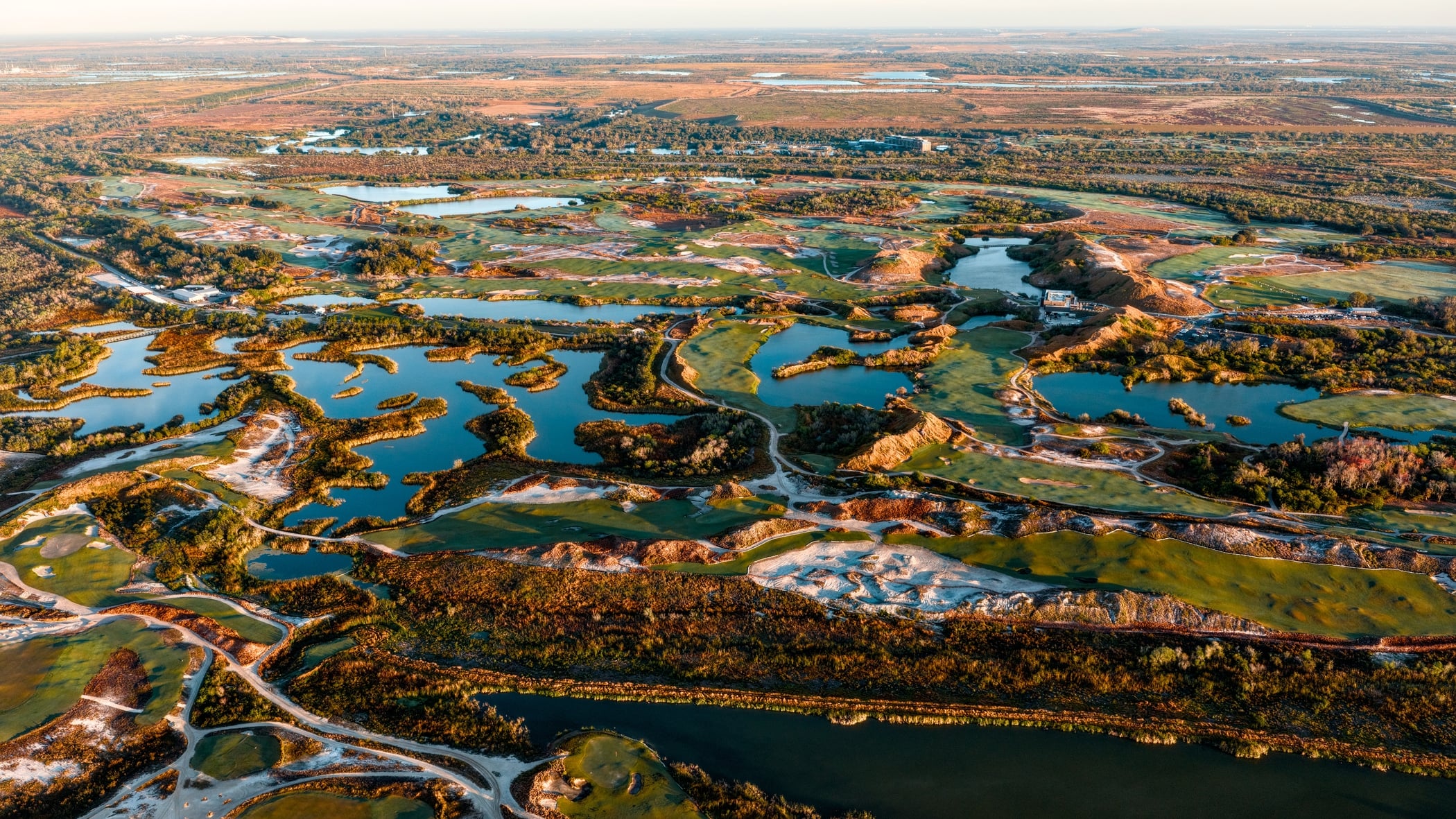
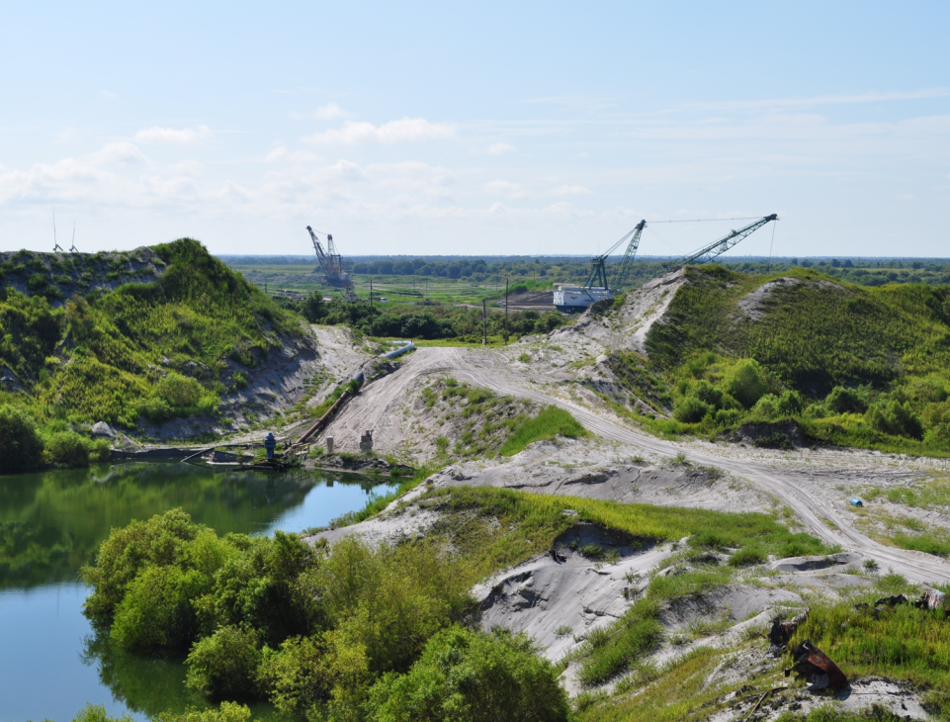
Streamsong sits in Florida’s Bone Valley, a region shaped by ancient seas, mineral deposits and a phosphate story that helped define Central Florida for generations. This land was not shaped first by golf architects. It was shaped by time, industry, recovery and imagination.
For more than a century, phosphate mining changed the look and movement of this part of the state. It created lakes, sandy ridges, broad sweeps of open ground and landforms that did not resemble the Florida golf most players had come to expect.
In another place, that history might have been hidden.
At Streamsong, it became the foundation.

From Reclaimed Land to Reimagined Golf
The origin of Streamsong is not a simple “build a resort” story.
It is a reclamation story.
Mosaic, the company that founded Streamsong, looked at land that had been mined and reclaimed and saw something more than a finished industrial chapter. It saw possibility. It saw a landscape with scale, character and movement. It saw a chance to create something that could support the surrounding region, respect the land’s next chapter and introduce golfers to a side of Florida they may not have believed existed.
That is what makes Streamsong different.
The project did not begin with the question many resorts ask.
How many holes can we fit here?
It began with a better one.
What is this land trying to become?
That question changed everything.
Streamsong did not need artificial waterfalls, forced corridors or a version of Florida golf people had already played. The land already had drama. It already had sand. It already had water. It already had ridges, edges, scale and silence.
The smartest thing anyone could do was listen.
The Architects Who Let the Land Speak
To turn that vision into golf, Streamsong needed architects who understood the value of restraint.
That is harder than it sounds.
Some places ask architects to create excitement. Streamsong asked them to recognize it. The difference is enormous.
Bill Coore and Ben Crenshaw brought Streamsong Red to life with their familiar gift for strategy, patience and natural movement. Tom Doak’s Streamsong Blue gave the resort another voice, one shaped by wild grasses, water, elevation change and bold contour. Gil Hanse and Jim Wagner later added Streamsong Black, a broader, bolder course with rolls, tumbles and a scale all its own.
Each course is distinct, but they share the same important trait.
They feel like they belong.
Red does not simply show you where to hit it. It asks what kind of golfer you want to be. Blue can feel wide and generous one minute, then exacting the next. Black reminds players that golf is not always about finding a perfect flat lie. Sometimes the game is at its best when the ground is asking questions.
Then came The Chain, a short course by Coore and Crenshaw that brought another layer to the Streamsong experience. It is playful, social and strategic in a different way. It understands something every golf professional knows: the game does not need to be 7,400 yards to be memorable. Sometimes the most fun shots happen with a wedge, a putter, a friend and a match that suddenly matters more than anyone expected.
And with Bone Valley, designed by David McLay Kidd and scheduled to open in 2027, Streamsong’s story continues to move forward. The name itself reaches back into the land’s deeper identity while pointing toward the next chapter of one of the strongest modern architecture collections in golf.
That is a rare thing.
Streamsong is not just a resort with multiple courses.
It is a place where some of golf’s most respected modern architects were given something precious: land worth listening to.

Why Golfers Feel It Immediately
As a golfer, you can sense when a place has been overbuilt.
You can feel when a course is trying too hard. You can feel when every mound has been placed for effect, every pond shaped for drama and every hole polished until the game loses some of its edge.
Streamsong does not feel that way.
It feels discovered.
That does not mean it was easy to build. Great simplicity rarely is. But the end result has a natural confidence to it. The courses do not beg for your attention. They earn it.
A 20-handicap player and a scratch player can walk off the same green talking about the same slope, the same bunker, the same ball that fed toward a hole like it had a mind of its own. That is one of the great signs of meaningful design. The course can challenge elite players without shutting out the everyday golfer. It can be strategic without being sterile. It can be beautiful without feeling staged.
That is where Streamsong separates itself.
It is not merely scenic. It is playable theater.
The wind matters. The angle matters. The firmness matters. The contour matters. A player has to think, and not in the joyless, defensive way golf sometimes demands. Streamsong makes thinking fun. It invites the running shot, the safer side, the bold line, the creative recovery and the second guess that follows you all the way to dinner.
That is the kind of golf that stays with people.
Not because it was perfect.
Because it was alive.
A Resort Built Around the Round
The best golf trips are never only about golf shots.
They are about the first coffee before the morning tee time. The ride to the course when nobody in the group is quite awake yet. The post-round argument over who actually had honors on the short par 4. The meal where the bad shots get funnier and the good shots get better.
Streamsong understands that rhythm.
The resort feels removed in a way that helps golfers settle into the experience. It is close enough to Tampa and Orlando to be reachable, but once guests arrive, the pace changes. The outside noise drops away. The sky feels bigger. The day starts to revolve around the walk, the match, the view, the next shot and the people sharing it.
That is part of why Streamsong has become more than a Florida golf resort.
It has become a golf trip people measure other golf trips against.
There are many great places to play in Florida. There are historic clubs, famous tournament venues, luxury resorts and beloved local courses all over the state. But Streamsong occupies a different space.
It did not join the existing Florida golf conversation.
It expanded it.

The Land's Second Life
The most powerful part of Streamsong’s origin story is not that golf was built on reclaimed land.
It is that the reclaimed land was not treated like something to cover up.
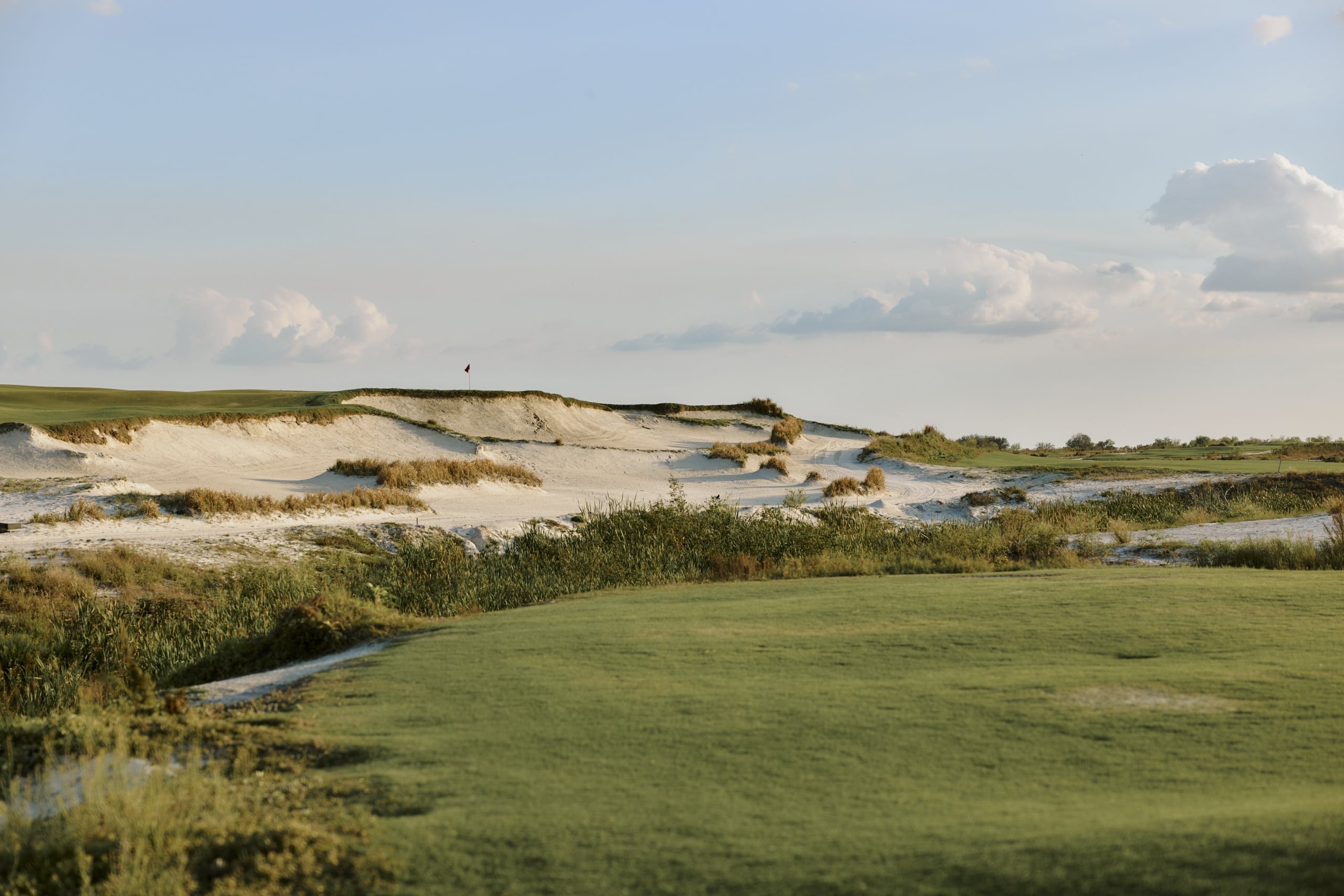
The past is still present here. You see it in the sandy rises, the lakes, the scale and the way the property refuses to look like anyone’s old idea of Central Florida golf. Streamsong does not erase what came before. It turns that history into strategy, beauty and experience.
That is a better story than reinvention alone.
It is transformation.
The land had one life, then another. It supported an industry, then became something new. It moved from extraction to restoration, from working ground to walking ground, from a place defined by what was taken from beneath the surface to a place defined by what golfers now discover above it.
That does not happen without vision.
It also does not happen without trust.
Trust in the land. Trust in the architects. Trust that golfers would understand something different if they were given the chance to experience it.
They did.
And they keep coming back.
The Florida Golf Story no One Saw Coming
Streamsong is not great because it feels unlike Florida.
It is great because it reveals a version of Florida most golfers never knew existed.
That distinction matters.
This is still Central Florida. This is still sand, sun, water, wind and wildness. But it is arranged in a way that feels surprising, almost improbable. It reminds golfers that familiar places can still hold secrets. It proves that a golf destination does not need centuries of club history to feel meaningful. Sometimes it needs the right land, the right eyes and the courage to let a place become what it was capable of becoming.
That is the origin of Streamsong.
Ancient seas left their mark. Bone Valley gave the region its name. Phosphate shaped the land. Reclamation gave it another chapter. Mosaic saw the possibility. Great architects listened. Golfers arrived and found something they did not know they were looking for.
A different Florida.
A different kind of golf.
A destination that did not have to manufacture a soul because the land already had one.
That is why Streamsong feels different.
Because it is.